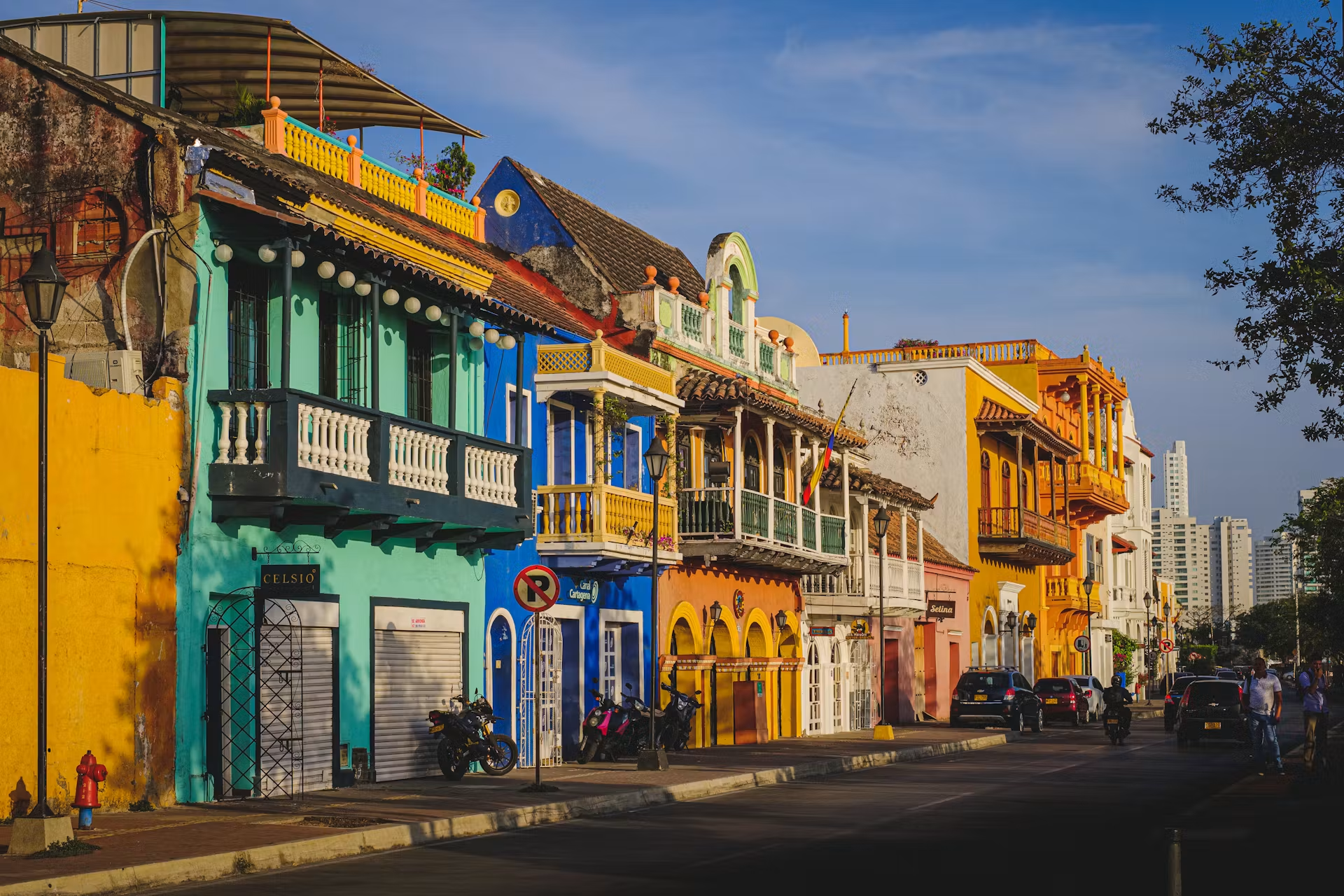
Legend has it that in the 1730s, in the town of Salazar de las Palmas, a priest named Francisco Romero listened to his parishioners' confessions and handed out an unusual penance: for every sin, plant coffee. Whether or not the story is true in every detail, Colombians have chosen to believe it — because it says something essential. In Colombia, coffee was never just a crop. It was an act of faith.
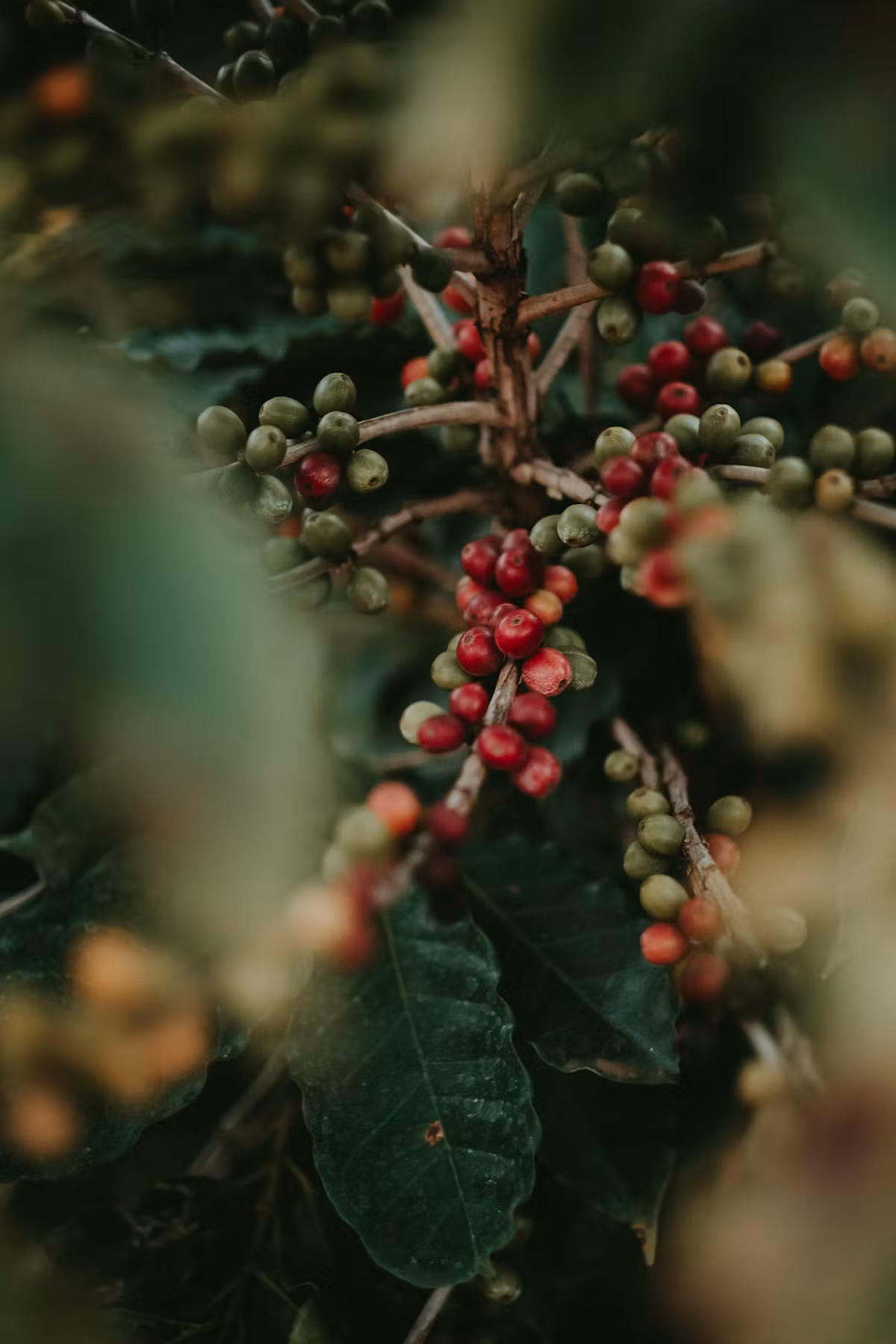
The earliest reliable records place coffee in the east of the country, in the Santanderes, in the eighteenth century. But its great century was the nineteenth, when it crossed the country westward with the paisa settlers — families who cleared steep mountainsides in Antioquia and what is now the Eje Cafetero, planting coffee on slopes so steep that machines are useless there to this day. Every bean, then and now, is picked by hand.
The mule and the mountain
Colombian coffee traveled by mule down the cordilleras, then by river to the sea. By the twentieth century it had become the country's signature: the Federación Nacional de Cafeteros was founded in 1927 to defend the small growers — more than half a million families — and in 1958 a fictional cafetero named Juan Valdez, with his mule Conchita, taught the world to ask for 100% Colombian.
In 2011, UNESCO declared Colombia's Coffee Cultural Landscape a World Heritage Site — not for the coffee alone, but for the way of life built around it.
La taza — El tinto
El tinto is Colombia's daily ritual: a small cup of black coffee, usually sweetened, poured from a thermos on a street corner, offered in every office, every bus terminal, every home. It is less a drink than a greeting. Refusing one is almost a social event.
For those who grew up in the diaspora, el tinto is the after-lunch cup at your grandmother's table — the one that came with conversation you were finally old enough to join.
- First plantings
- ~1730s, los Santanderes
- Regions
- Eje Cafetero, Huila, Nariño, Santander
- The cup
- El tinto — small, black, ever-offered
- Word to know
- «Tintico» — the affectionate diminutive