In 1727, a Portuguese-Brazilian officer named Francisco de Melo Palheta was sent to French Guiana to settle a border dispute. The French guarded their coffee plants jealously — export of seeds was forbidden. But the story Brazilians tell is that the governor's wife took a liking to Palheta, and when he left, she handed him a farewell bouquet. Hidden inside the flowers: coffee seedlings.
He planted them in Pará, in the Amazonian north. It took a century for coffee to find its true home further south — the valley of the Paraíba, then the famous terra roxa, the purple-red earth of São Paulo — but by the 1840s Brasil was the largest coffee producer in the world. It has never given up the title.
O império do café
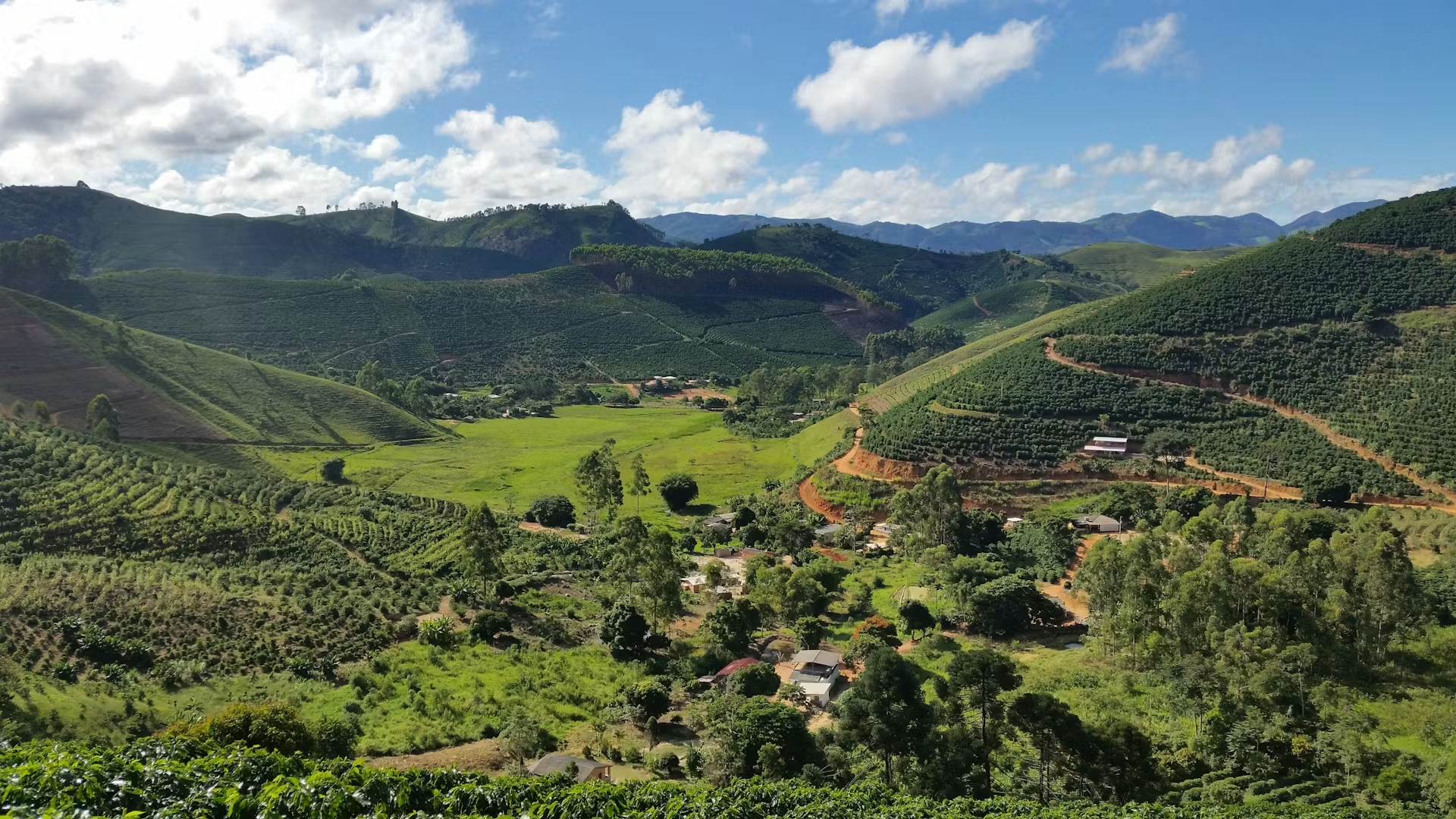
Coffee built modern Brazil in a very literal way: the railroads were laid to move it, the port of Santos grew to ship it, and for decades national politics was nicknamed café com leite — coffee and milk — after the two states, São Paulo and Minas Gerais, that traded the presidency between them.
It also changed who Brazil is. Waves of immigrants — Italians, Japanese, and many others — arrived to work the fazendas, and stayed to remake the country's food, cities and surnames.
A xícara — O cafezinho
O cafezinho is Brazil's universal gesture: a tiny cup, very hot, usually very sweet, offered before you have said why you came. In homes, in shops, in offices, at the mechanic's — refusing it is technically legal, but socially inadvisable.
And if your family is Brazilian, you know it is not about the coffee at all. It is about sitting down. A vovó knew that better than anyone.
- Arrived
- 1727, Pará — hidden in a bouquet
- Regions
- Minas Gerais, Mogiana, Cerrado, Espírito Santo
- The cup
- O cafezinho — tiny, hot, ever-offered
- Word to know
- «Saudade» — the longing a cafezinho cures